
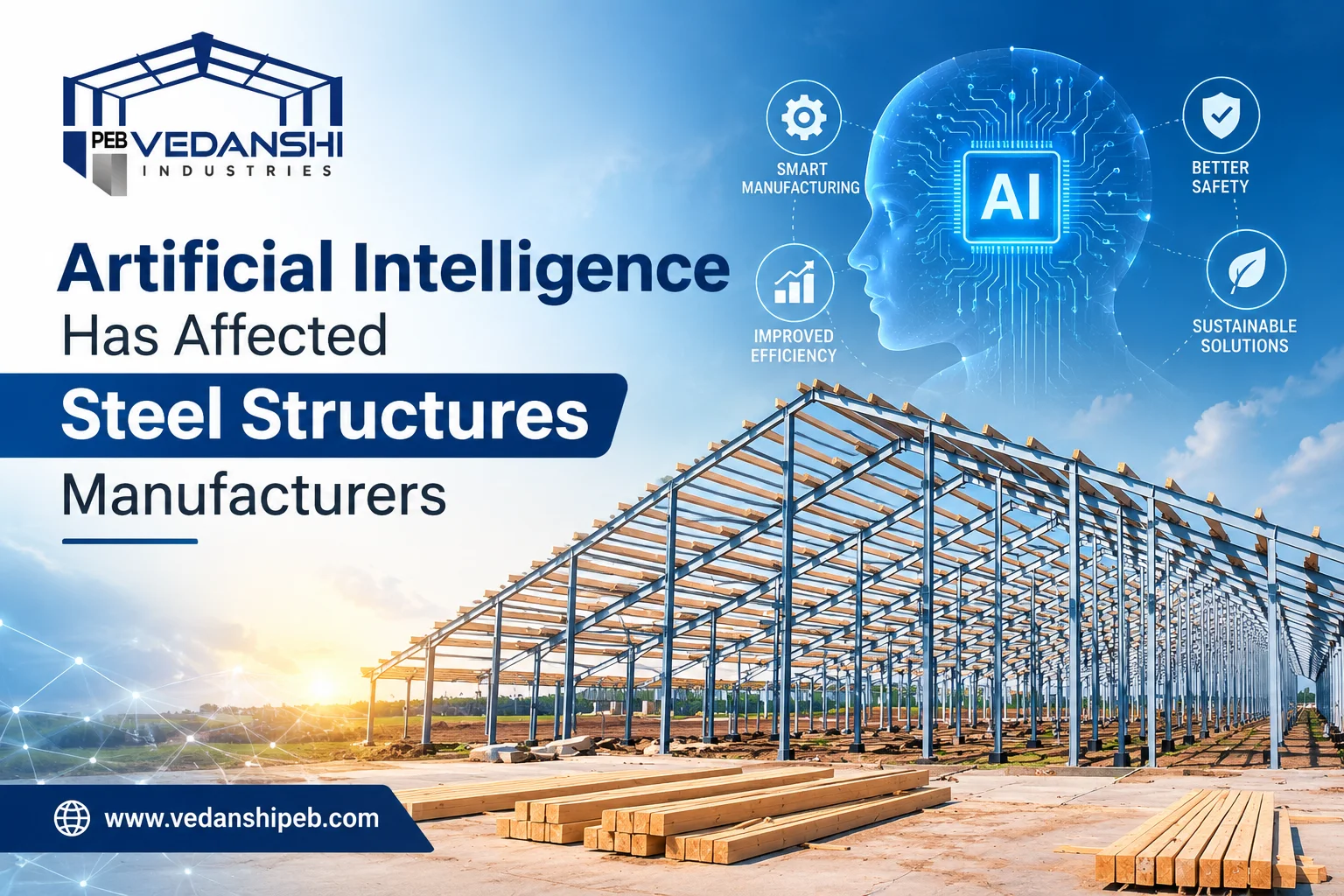
Looking back at how construction projects used to be done a decade ago, one cannot fail to notice the drastic changes that have been brought by artificial intelligence. Construction projects are now much more predictable and precise. In addition, most of the technological advancements can easily be attributed to the development of AI.
Modern Steel Structures Manufacturers have already found ways to incorporate AI into their business model. If you have ever wondered how modern constructions can be done so efficiently, you should know that a significant share of credit belongs to AI.
The following information is meant to shed light on the subject.
The Transition to Smart Manufacturing
Steel structure manufacturing involves the following three major steps: designing, fabrication, and installation. Each of these steps has traditionally relied much on manual labor.
Here is the problem. Although manual labor is good, it does have drawbacks associated with the lack of consistency.
That is where the introduction of AI comes into play.
By introducing data analysis and automation into the construction process, the industry can make sure that the results would be consistent.
AI in the Design Process
Starting from the basics, the role of AI in the design process cannot be overlooked. With the use of AI technologies, designers can do the following:
- Create a highly detailed 3D design.
- Simulate load conditions prior to starting construction.
- Identify potential weak points in a building.
- Customise a design to the specific needs of a client.
Smarter Fabrication Techniques Using Automation
After the design stage, steel structure fabrication starts. Before the introduction of AI-based techniques, this step relied heavily on manual labour and involved numerous potential inconsistencies.
Thanks to AI, the process became the following:
- Cutting and shaping are automated using CNC machines.
- Robotic welding can ensure the same level of quality throughout the structure.
- Wastages can be minimised;
- Fabrication is made much faster.
As a result, the quality of manufactured items is uniform across all the structures.
Smart Quality Control System
Prior to the introduction of AI systems, the quality control process relied entirely on human effort. Of course, skilled employees are always welcome in any business. However, AI can improve the current system of inspection by doing the following:
- Identifying problems with welding;
- Analyzing the alignment and other features of a structure;
- Monitoring material quality in real-time.
With the help of AI, the detection of problems has been shifted from the post-construction period to the process itself, thus reducing further expenses.
Better and More Accurate Planning
The lack of a proper planning stage often leads to many problems in the construction process. These include cost overruns, delays, and inefficiency. The use of predictive analytics based on AI can solve this issue, as one can do the following:
- Predict accurate timeframes;
- Calculate project expenses;
- Manage project resources;
- Plan the process accurately.
Thus, planning has become more reliable than ever.
Optimised Supply Chain and Inventory Management
Another problem with construction is related to the procurement of necessary materials. Material shortages or overbuying can cause numerous troubles for a company. Using AI technologies, it is possible to:
- Predict demand for the necessary materials;
- Track inventory in real time.
- Prevent wastages;
- Optimise the procurement process.
It is especially helpful in the case of massive constructions, as even slight delays in providing the materials would put a hold on the process.
A Better On-Site Experience
As mentioned above, AI helps in automating the manufacturing process. But that is not the end yet. AI can also be used to improve the performance of workers on-site. In particular, the technology can help with the following tasks:
- Inspecting the site using drones;
- Minimizing risks;
- Managing installation in real-time;
- Ensuring worker safety.
As a result, the work on-site has become much more productive.
Practical Results of Incorporating AI into Construction
Although the use of artificial intelligence might sound impressive, what is the benefit for those using such technologies? Here are some advantages that should be noted:
- Quicker completion of projects;
- Reduced project costs;
- Increased precision in designing steel structures;
- Better scalability for large-scale projects;
- Increased safety standards.
Obviously, the client would benefit greatly from the use of such technologies by Steel Structures Manufacturers.
Environmentally Friendly Construction
Finally, there is the sustainability factor. AI can optimise the amount of material to use, which minimises wastage. Additionally, as steel can be recycled, such structures contribute positively to the environment. In addition, advanced designs usually lead to more energy-efficient buildings.
Challenges of Integrating AI into the Industry
Although there are plenty of opportunities in AI, there are also obstacles to overcome. These include:
- Necessity to spend additional funds;
- Requirement for skilled personnel;
- Compatibility issues with existing systems;
- Resistance to innovation in some businesses.
However, as far as the long-term effects go, this problem can easily be managed.
What Can Be Expected from AI in the Future?
AI is only going to get better with time. Some future developments include the following trends:
- Full automation of factories;
- Use of digital twins and simulations for managing the project in real-time;
- Intelligent steel structures powered by AI;
- Use of new fabrication techniques (for example, 3D steel printing).
All of this should result in increased productivity and efficiency in the industry.
Conclusion
AI is not supposed to replace people in the construction process. What it does is enhance their capabilities and provides additional assistance. Forward-thinking Steel Structures Manufacturers like Vedanshi Industries has started using AI and it is beneficial for the client and the company as well.