
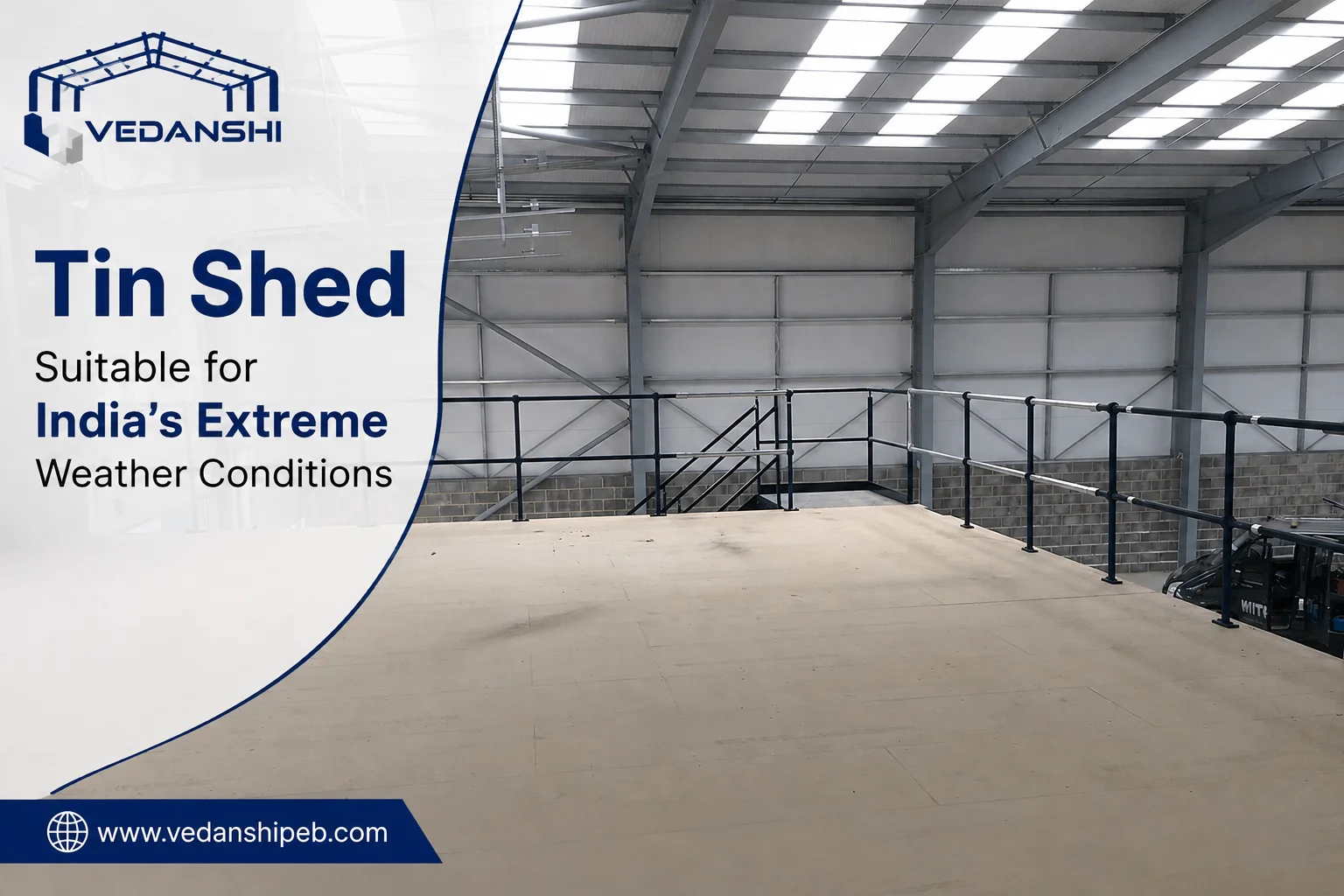
India’s weather conditions are quite challenging for industrial, agricultural, commercial and storage structures. Extreme summer heat, heavy monsoon rainfall, humidity and strong winds- all of these can affect a tin shed’s performance. That is why reliable tin shed manufacturers ensure that they offer excellent grade tin-shed which not only cover space but also offer adequate protection. It must be suitable enough to offer structural stability while bearing heavy climatic changes.
Being in this business for a long time, we design tin sheds that offer all the above-stated benefits. Let’s explore through this blog what makes our tin sheds a better choice for India’s extreme weather conditions.
Quality Roofing Sheets for Better Protection
The roofing sheet is the first barrier against sunlight and rain. For Indian weather conditions, selecting suitable galvanized or coated steel sheets can help improve durability and resistance to moisture and corrosion. Some of the important factors to consider are:
- Sheet quality and thickness
- Protective coating
- Correct fastening
- Proper overlap and joint detailing
- Suitability for the local environment
Structural Strength for Strong Winds
Strong winds can place high pressure on large roof and wall surfaces, and that is why a tin shed needs a properly engineered structural framework. It must be capable of handling the expected site-specific loads. The overall performance of the tin sheds depends on the strength and connection of primary structural members and purlins and secondary members. The tin shed manufacturers must also focus on the bolted connections, foundation, and anchoring arrangements. Ensuring overall structural strength will help prevent tin sheds from damage due to strong winds.
Heat Management through Insulation and Ventilation
During India’s hot summers, an uninsulated metal roof can transfer significant heat into the building. This can make the internal environment uncomfortable and may be unsuitable for certain storage or working applications. Insulation and ventilation can help address this challenge. Depending on the building’s purpose, solutions may include insulated roofing, insulated wall panels, ridge ventilators and louvres. Together, these features can help reduce heat accumulation and improve air circulation.
Corrosion Protection for Humid Conditions
Humidity and moisture can accelerate steel corrosion, while coastal areas may present additional challenges because of salt-laden air. Appropriate protective coatings can help reduce exposure-related deterioration. The level of corrosion protection should depend on the location and operating environment. Periodic inspection of sheets, fasteners, joints and structural components can also help identify maintenance requirements at an early stage.
Conclusion
A tin shed can provide reliable protection in India’s extreme weather when its design addresses the specific challenges of heat, rain, wind and humidity. Quality coated sheets, strong structural components, insulation, ventilation, and corrosion protection contribute to better performance. Businesses should therefore evaluate both material quality and manufacturing expertise when choosing tin shed manufacturers. At Vedanshi Industries India Private Limited, we are also helping businesses create functional structures suited to diverse industrial, commercial and agricultural requirements through our quality-tested and sturdy tin sheds.
FAQs – Frequently Asked Questions
Yes, the use of suitable roofing materials, insulation and ventilation can help manage heat and improve the performance of a tin shed during hot weather.
Proper roof slope, gutters, downpipes, flashing and well-sealed joints help direct rainwater away from the structure and reduce leakage risks.
Yes, but appropriate corrosion-resistant materials and protective coatings should be selected according to the coastal environment.
Insulation can reduce heat transfer through the roof and walls, while ventilation helps remove accumulated hot air from inside the structure.
Proper structural engineering, suitable primary and secondary members, secure connections, anchoring and appropriate roofing installation contribute to wind resistance.